

Remembering Ambuya Taurwi Matipano
I once wrote about my grandmother in a previous post. In her final years, she was over a hundred, living with my mother. Her hearing was poor, and conversations required patience. I would visit on Sunday afternoons, spreading a reed mat outside and sitting while watching toddlers play.
During one of my visits, I tried to talk with her about clan poems, hoping to capture some of her knowledge. She remembered a few lines, but her attention waned quickly. My mother explained that Mambuya, as she was fondly called, could no longer sustain long conversations due to age. In that moment, I felt the weight of all the stories we had lost simply because they had not been written down.
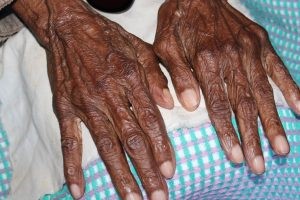
Visiting her, I became deeply aware of the fragility of memory and knowledge. Every question I asked, every answer she struggled to recall, reminded me that what is not passed on through words, writing, or other means can disappear. This is not just a lesson about my family but about all of us. Our elders hold histories, traditions, and wisdom that may vanish if we do not actively seek out that knowledge.
This grandmother, Ambuya Taurwi Matipano, passed away in October 2021. Then, in October of this year, we laid her sister, Ambuya Jaina Muvezwa, to rest, another incredible woman from our family who lived into her late 90s.
Gone but not forgotten
Both women lived extraordinary lives, and it is clear to me that they profoundly shaped the woman I am becoming. Reflecting on them, I realize that my love of writing is, in many ways, inherited from them. They dreamed of expressing themselves through words, of capturing stories and experiences, yet the world they lived in did not permit it.
They could not fully live out that part of themselves, but through me, their dreams find life. In writing, I carry forward what they could not, giving voice to a legacy that otherwise might have remained silent. In this way, they are very much present. They live on in every word I write, in every story I share. They may be gone, but they are certainly not forgotten.
Remembering Ambuya Jaina Muvezwa – A woman of many talents
Ambuya Muvezwa was certainly a woman of many talents. I still remember the last conversation I had with her. She vividly recalled her days as a much younger woman, telling us proudly that she could do anything. She was a potter, her hands shaping clay with ease. She could thatch a round hut and even construct a cattle kraal, truly the kind of woman we would call independent today.
Her energy seemed boundless, and the fact that she could pull off tasks which some women regarded as a man’s job is nothing short of amazing. She recalled how, one time, a gentleman from the community asked her to get down from the roof so that he could complete the thatching job. He just could not stand seeing her up there.
What bothered her
Yet despite all this, there was one thing that seemed to bother her slightly: she had never mastered the English language. I felt a pang when she said that, because, honestly, it didn’t have to bother her. And yet it did, because English is a language that carries a lot with it, especially in terms of opportunity and recognition.
Even so, she was remarkably successful. She could do so much with her hands and her mind, and she still raised her children well. Those children are now doing well for themselves, which in itself is no small feat. Even without English, her life was rich, full, and meaningful. I am grateful she lived that life.
The desire to write
Interestingly, Ambuya Matipano’s lifelong wish was to be able to write. Oh, how she wished she could write! She would tell us, ‘Dai ndaigona kunyora… ndaidai ndakazvinyora zvese, zvese ndaizvinyora kubvira ndichiri musikana. Hapana kana chimwe chandaizosiya.’
It is now so clear to me that both these women had a deep desire to read and write. Perhaps that is why I love writing. It seems to be in my DNA, passed down through generations, even if for them it was only a desire.
Living their dreams
As you see, I have this blog, ZimbOriginal, where I write about Shona culture and language. More recently, I have started another writing project, LittleBusinessZim, exploring entrepreneurship in Zimbabwe.
My journey reminds me of these two incredible women, the skills they had, the dreams they carried, and the courage they showed in living full lives. My writing, in some way, honours them, and now that I think about it, I am determined to live their dreams for them and for me.
For Ambuya Matipano and Ambuya Muvezwa
Ambuya Matipano and Ambuya Muvezwa, here’s to us. All this writing, all these words, these English words, are for you.
For the women who inspired my mind and my love for words.
For the women who dreamed in silence but taught me how to give a voice to my own dreams, here’s to eternal rest.
You will forever be in my memories.
P.S. If you enjoyed this story, I’d love to stay connected. I share more personal reflections, cultural insights, and behind-the-scenes notes in my letters. Click here to join and you’ll be hearing directly from me.
Love this !
Thank you for reading Bellona. I’m glad you love it!