
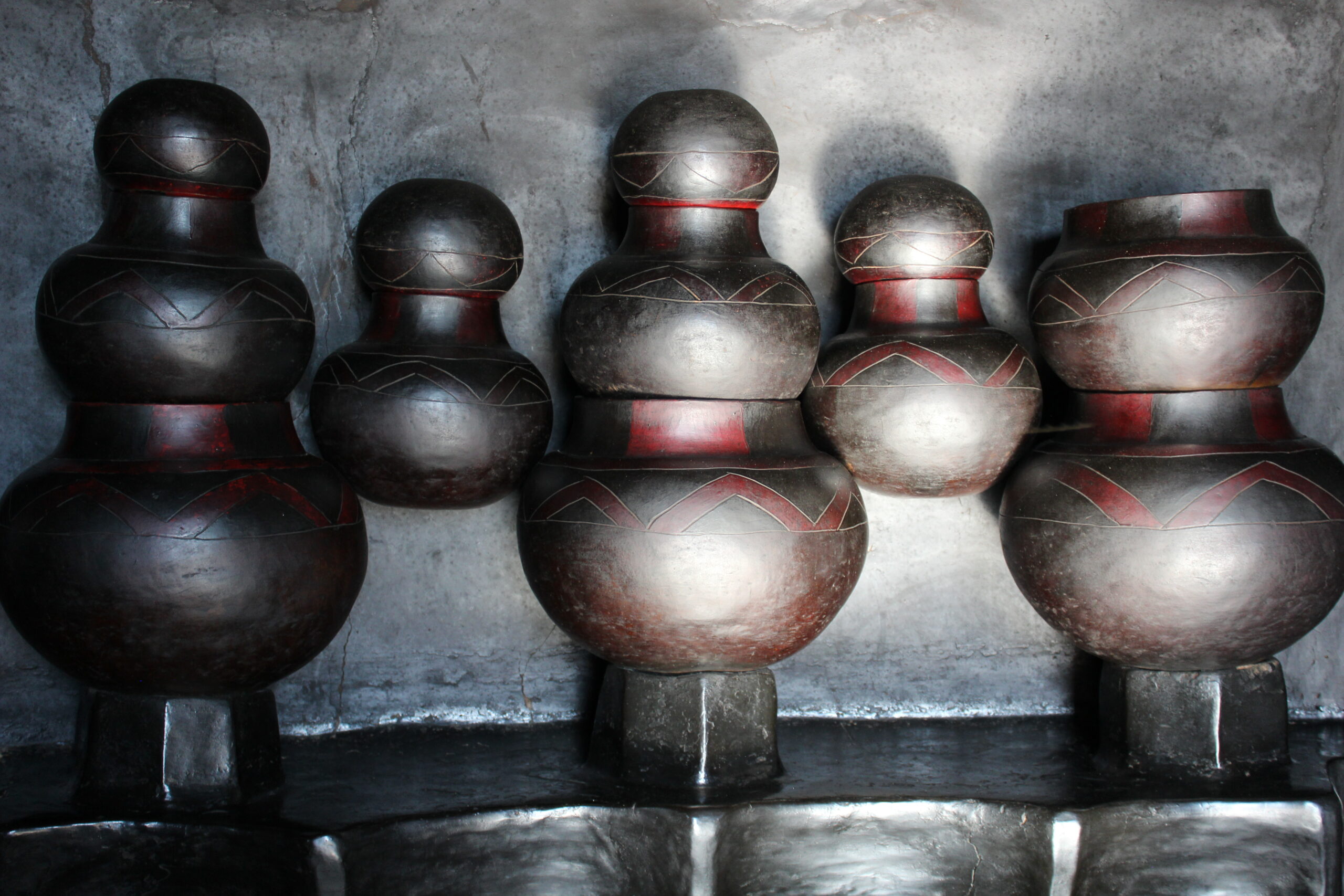
Hari chiumbwa chevhu chinobikirwa zvekudya pachoto, nekuchengeterwa zvinwiwa nezvimwewo zvekudya.
Kuumba hari kunosanganisira kutsvaga rondo, kuumba kwacho chaiko, kudavadisa hari dzacho, kuomesa, nekuzopisa. Basa rekuumba hari rinoitwa nevanhukadzi kunyanya.
A clay pot, known as hari, is a moulded object used for cooking, as well as storing liquids and other foodstuffs.
Making clay pots includes sourcing clay, moulding the vessels, decorating, drying and firing. The making of clay pots, known as kuumba hari, is mostly done by women.
Kuchera rondo
Clay sourcing
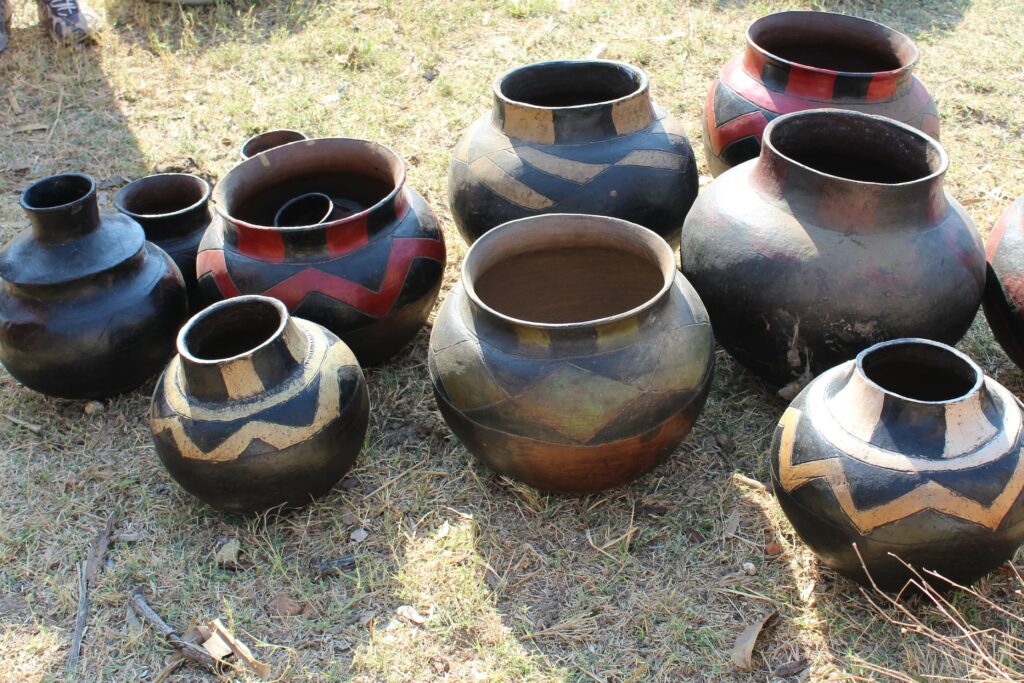
Kuumba hari kunotanga nekuchera ivhu rekuumbisa. Muumbi anoshandisa ivhu rinonzi rondo. Rinonziwo munyakwe, mupunzo, kana dongo.
Rondo rinocherwa kubva pahova kana kubva pamahombekombe yenzizi. Kuchera rondo kunoitwa nebadza. Kana racherwa, rinofukidzwa netsima dzevhu kuti richengetedze unyoro. Rinozotakurwa roendwa naro riri mutswanda.
Dzimwe nguva muumbi anobatsirwawo nemhuri yake, vangava vari kana vana vadiki. Vanobatsira nekuchera pamwe nekuzotakura rondo.
Making of clay pots starts with digging up the clay used for clay pot making. The potter uses a special clay known as rondo. It is also called munyakwe, mupunzo, or dongo.
This clay is dug up from streams and river banks. Digging up the clay is done using a hoe, known as badza. After being dug, the wet clay is covered using lumps of soil so that it does not lose its moisture. It is then carried using reed baskets known as tswanda.
A potter sometimes gets help from family members, such as young children. They help with digging up and transporting the clay.
Kuumba
Moulding
Kazhinji, basa rekuumba rinoitirwa panze, paruvanze pemusha. Asi kune vamwe vanenge vane imba yavanoshandira. Nzvimbo inenge yakanaka kuumbira inzvimbo inenge iri pasina zuva kana mhepo, kuitira kuti hari dzisakurumbidze dzaoma dzichiri kuumbwa.
Rondo risati rashandiswa, rinotanga rabviswa tsvina, inosanganisira uswa, midzi, netutombo. Rinozodzvurwa paguyo nemutswi. Rinoitwa richidirwa mvura zvichisanganiswa kuti rondo riite dhaka. Kudzvura uku kunoitirwa kuti riote, uye kuti rizoumbika richibatana. Ndiko kuti ribuditse muumbirwo unenge uchidiwa.
Tava pakuumba, zvimhedu zvedhaka zviviri zvinotorwa zvoumbiridzwa kuita zvimikunguru zvogadzikwa mundiro, kana chimwewo chinhu chakasandarika. Zvinoiswa zvakabatanidzwa zvichitevedza muumbirwo wendiro kuita denderedzwa. Muumbi anotanga kuumba achizvuvira dhaka kumusoro nemukati achishandisa ruoko rumwe, rumwe ruoko ruchinge rwakatsigira chiumbwa nekunze, achiita achitenderedza ndiro yacho.
Kunotanga kuumbwa dumbu rehari, kuchitevera bendekete, richiteverwa nemutsipa, kuchizotevera muromo. Chiumbwa chinounzwa pamwe nekuparingwa nemukati nedemhe, kana chimedu chehari yakaputsika. Chiumbwa chinounzwa nekuparingwa nekunze zvakare nemuunzo. Muromo, kana kuti hwasha, unoparingwa nekachira kanyoro.
Chiumbwa chinozosiyiwa kuti chiome chiri mundiro, asi kuzasi kunofukidzwa nejira nyoro kuti kusaomewo. Kana chaoma, chasimba chete zvekusvika pakuti chishandike nacho, chinobva chapindurudzwa, ndiro iya yanga iri pasi yozobviswa, garo rehari roumbwa.
Dhaka rinenge rasara rinochengetwa rakadaro kuti rizoshandiswa mberi. Kuti risaome, rinoputirwa muchikweshe.
Usually, an open space within the homestead is used as the working area. Others however have a hut which they use as a workshop. The selected working area should be away from direct sun or the wind, to prevent premature drying of the pots.
Before the clay can be used, it is first refined to remove dirt such as grass, roots, and grit. It is then pounded on a stone slab, known as guyo, with a wooden pestle known as mutswi. Water is added into, and worked into the clay to make a paste. The pounding is done so that the clay becomes of an even consistency, and is mouldable. This allows for manipulation into the desired shape.
Moving on to the actual moulding, two thick coils or slabs are taken and placed on an old metal or wooden plate or some flat object. They are joined together following the shape of the plate to form a complete circle. The potter moulds by pulling the clay upwards from the inside with one hand, using the other hand as support on the outside, while rotating the plate.
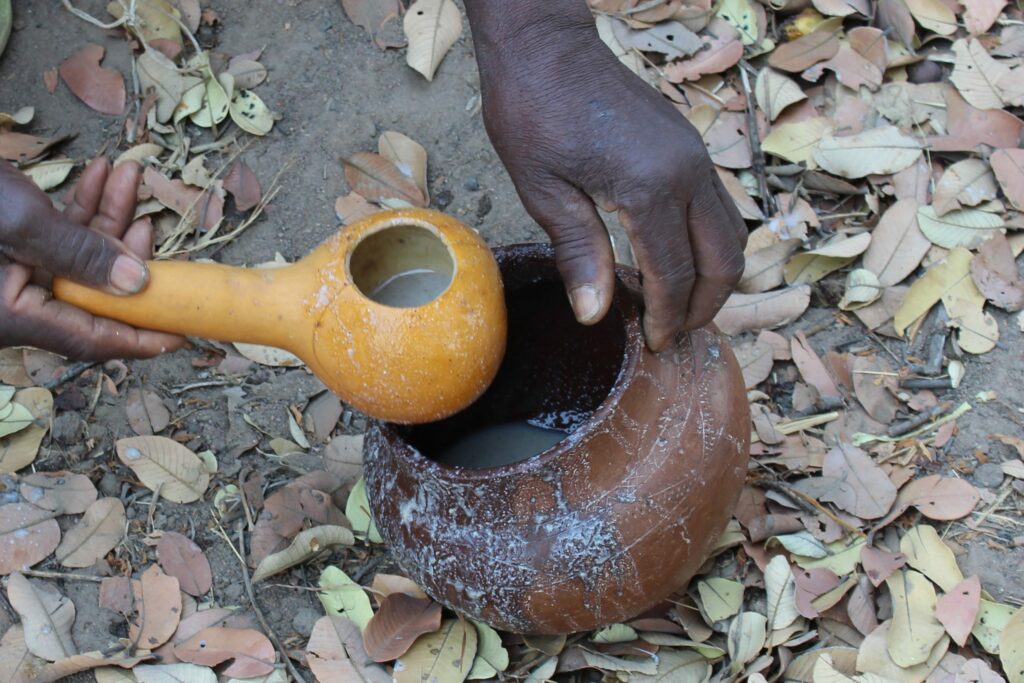
Firstly, the body (dumbu) of the pot is moulded, followed by the shoulder (bendekete), then the neck (mutsipa), and then the lip (muromo). While moulding, the inside of the pot is shaped and smoothened using a piece of broken gourd, called demhe, or a curvy piece of a broken pot. A flat-edged instrument called muunzo is used on the outside to smoothen and extend the pot. The lip or rim is smoothened using a small wet cloth.
The lower part is covered with a wet cloth to keep it wet while the rest of the pot is left to dry. When it is stable enough to be handled the pot is turned upside down, and the base (garo) of the pot is moulded.
The leftover clay is stored for as long as possible as is. To avoid drying, it is usually rolled in a waterproof bag.
Kudavadisa
Decorating
Kudavadisa hari kunoitwa mushure mekunge dzamboomeswa kwechinguva. Zvidavado zvinoiswa pahari kuti hari dzinake, asi dzimwe nguva zvinenge zvine zvazvinomirira.
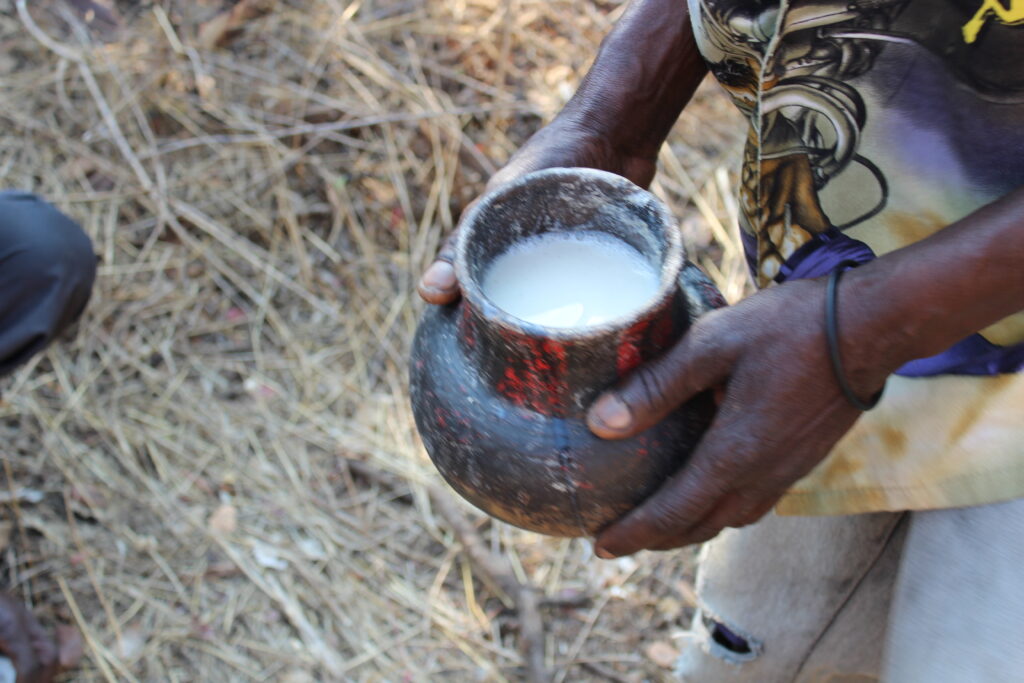
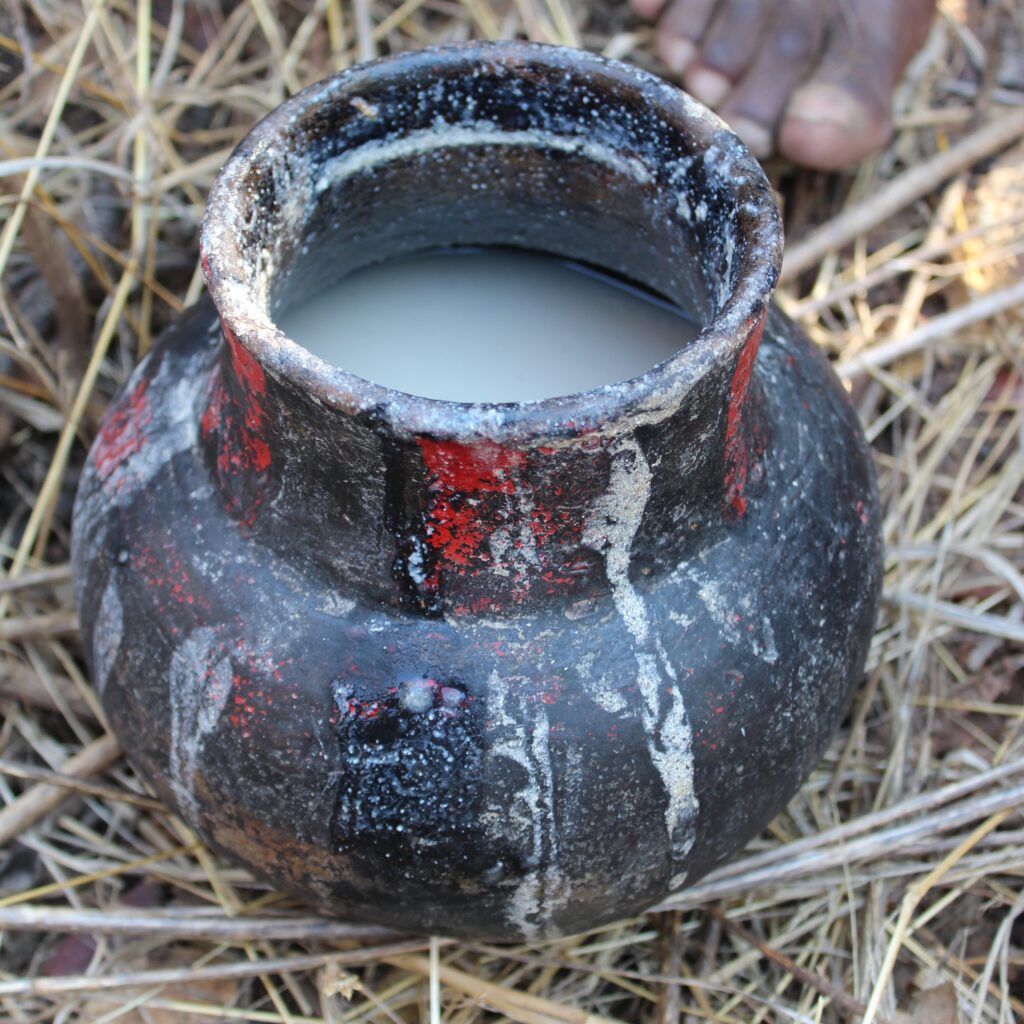
Zvidavado zvinoitwa pahari zvinosanganisira mapatani emivangwa mivangwa yakaita matriangle kana marectangle, zvidavado zvenyora zvinonzi nembo, kana mitsetse chete. Zvidavado zvine mapatani ane ruvara zvinowanika pahari dzekuchengetera zvekudya kana zvinwiwa, zviri kubedendekete kana kumutsipa kwehari.
Ivhu dzvuku, chidziro, kana chimwewo chichena sedota, ndizvo zvagara zvinoshandiswa pakuitisa ruvara. Ivhu dzvuku rinokuyiwa kusvika ratsetseka, rosanganiswa nemvura, mvura iya yochizozorwa pahari nemunwe kana kachira. Mushure mekuzora, hari inokwizwa nehurungudo. Chidziro chinoiswawo nenzira imwe zvakare, kana kuti chinokwizirwa pahari mushure mekunge yambonyoroveswa, yozokwizwa. Pane dzimwe hari, ruvara ruchena runokwizirwa pamusoro penembo kuti dziratidzike. Zvizorwa izvi zvinoiswa hari dzisati dzapiswa, asi zvinogona kuzozorwa zvakare mushure mekupisa.
Mazuvano, pendi dzine mhando dzakasiyana dzeruvara dzava kuita dzichitsiva zvizorwa zvekudavadisa zvekare. Pendi inozorwa nechimuti, munzwa, kana nebhuracho chairo, mushure mekupisa.
Decoration of pots is done after they have been sun-dried for a while. Decorations are done to simply beautify the pot, while sometimes they are for symbolic purposes.
Decorations that are done on pots include triangle and rectangle patterns, incisions or impressions, or single lines. Normally decorations with coloured patterns are found on storage/serving vessels where they are placed on the upper part of the shoulder and on the neck.
Traditionally, colouring was done with red and yellow ochre, graphite, and a white substance such as ash. The ochre is ground to a fine powder, mixed with water, and applied with a piece or cloth or finger. After application, the pot is burnished with a smooth, round river pebble known as hurungudo. Graphite is applied in the same way, or else rubbed directly onto the wetted surface of a pot and then burnished. The white colour is rubbed across the patterned surface of some pots to make incisions or grooves show up. The materials are applied before firing, but some touch ups could be done after firing.
Traditional decorative materials are now being replaced with oil paints in a variety of colours . The paint is applied with a stick, a thorn, or even a brush, after firing.
Kuomesa
Drying
Nguva inodiwa kuomesa hari inoenderana nemamiriro ekunze. Kuomesa hari kunogona kutora zuva rimwe kana mazuva matatu kana mana.
Hurungudo inoshandiswa kuzokwiza kunze kwehari yacho itsva mushure mekunge yaoma.
The time it takes to dry a pot generally depends on the prevailing weather. Drying ranges from a day to three to four days.
A small pebble called hurungudo is used to later polish the outer surface of the new pot after it is dry.
Kupisa
Firing
Vanhurume havabvumirwe kusvika pari kupiswa hari nekuti zvinonzi zvinoremadza urume hwavo.
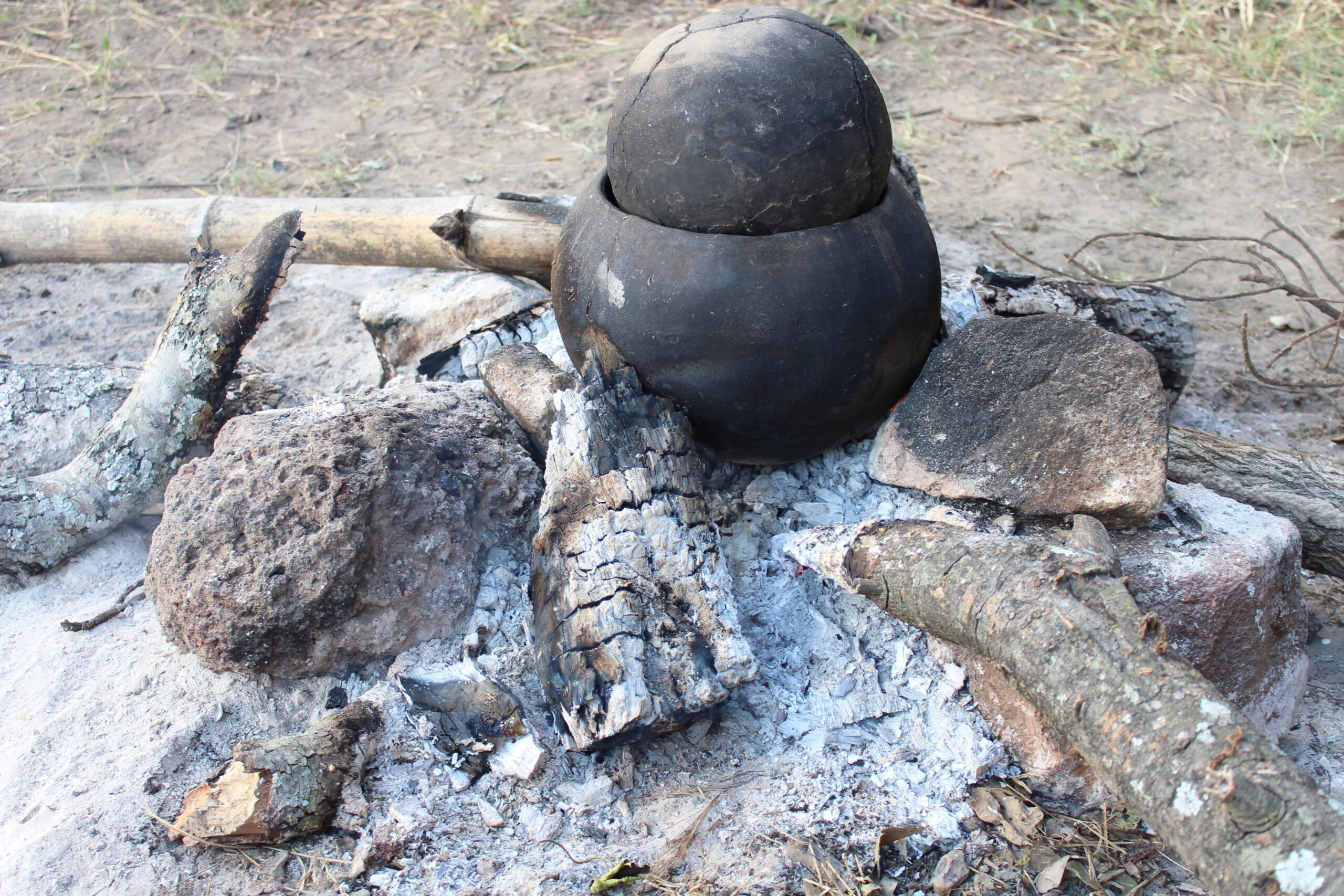
Nzvimbo inoitirwa zvekupisa inowanzoiswa pedyo nemusha. Kazhinji inenge iri nzvimbo yakasandarika, kana kuti riri gomba risina kudzika. Kazhinji hari dzinopiswa nendove kana nemakwati. Hari dzinogadzikwa pamusoro pezvimedu zvendove kana zvemakwati zvinenge zvakaiswa pasi, dzokwidibirwa neimwe ndove kana makwati, moto wobatidzwa. Hari dzinozosiyiwa kuti dzipore mushure mekupiswa.
Men are not welcome during the firing process because the process is believed to be harmful to their potency.
The area for firing is usually near the homestead. It is generally on flat ground or in a shallow pit. Most commonly cow dung and/or tree bark are used as fuel. The pots are placed on top of pieces of bark or dung on the ground, and then covered with more lumps of cow dung and tree bark, and then a fire is started. The pots are normally left to cool after firing.
Note of thanks
Thanks to the researchers and creators whose work helped inform some of the ideas here, including Nyamushosho et al. (2021), Lindahl & Pikirayi (2010), and Karanganda TV.