
I get lots of questions on this blog, people trying to find answers to Shona riddles that are honestly really hard to crack. While I would love to respond immediately, most of the time I don’t even know the answers myself. What I do instead is periodically review them and see if I can figure them out.
To be honest, I’m not always sure if my answers are the ‘correct’ ones, but I analyse each riddle from many angles and give it my best shot. In the analysis, I consider a number of factors. These include vocabulary and wordplay, as well as the lives of Shona people in the past. In particular, I think about the agrarian economy, the tools and implements of daily work, the natural surroundings, and the rhythms of life in Shona villages.
Here are 15 riddles (zvirahwe) that I picked from the comments on some of my previous posts, along with my best attempts at answering them. Feel free to drop a comment with your version of the correct answer or even share another riddle that still needs cracking.
1. Chipako chizere ndarira.
mukanwa (mouth)
paka: to fill or pack tightly into something
chipako: a container into which things are tightly packed
ndarira: brass ankle ornaments which jingle with motion
The riddle compares the mouth to a container filled with many ornaments that rattle together. The teeth sit closely packed in the mouth and produce sound when a person speaks or chews.
At first glance, I related the word chipako to bako, meaning a cave. However, upon further research, I realised that in this context the verb paka, meaning to fill tightly into something, is the better fit.
2. Mukunda wekwedu anogara akasunama.
chiremwaremwa (bat)
sunama: be upside-down
mukunda: daughter
Bats spend their days hanging upside down in caves or hollow trees, with their wings draped around them like cloaks.
3. Amai handei munozvarira mberi.
munhanga (pumpkin plant)
Pumpkin vines grow long and spread widely across the ground, so the fruit often grows far from where the seeds were originally sown.
4. Dzakafa dzinosunga mhenyu.
chitirobho (strop)
Chitirobho is a leather strap used to secure a neck yoke on oxen. The riddle personifies the tool as binding something living (the ox) using something from the dead (leather).
This riddle might be difficult to imagine for someone who has never seen cattle yoked and working in the fields. I spent most of my childhood in rural Zimbabwe, so the sight of oxen, ploughs, and zvitirobho is very familiar to me, as such tools are an everyday part of agricultural life.
5. N’ombe yababa vangu inokuma yaona musha.
chitima (train)
kuma: low
Trains sound their horns when approaching stations.
Today, the use of trains is much less common in Zimbabwe, so many children might struggle to imagine this riddle’s response or fully understand the metaphor.
6. Mbuya munochemei muzukuru ndasvika?
uta nemuseve (bow and arrow)
The bow, which is the larger overarching unit of the two-piece set, represents the grandmother. The arrow is the grandchild. When the arrow is released, the bowstring reverberates, sometimes continuing even after the arrow has already hit the target.
7. Kwatsva sora kukasara miti miviri.
baravara (shaven head)
The riddle describes a completely shaven head, where all the hair is gone, leaving only the ears, which are likened to two solitary trees standing out prominently after shaving.
8. Mutatu mutatu wakazadza nyika.
mapfihwa (hearthstones)
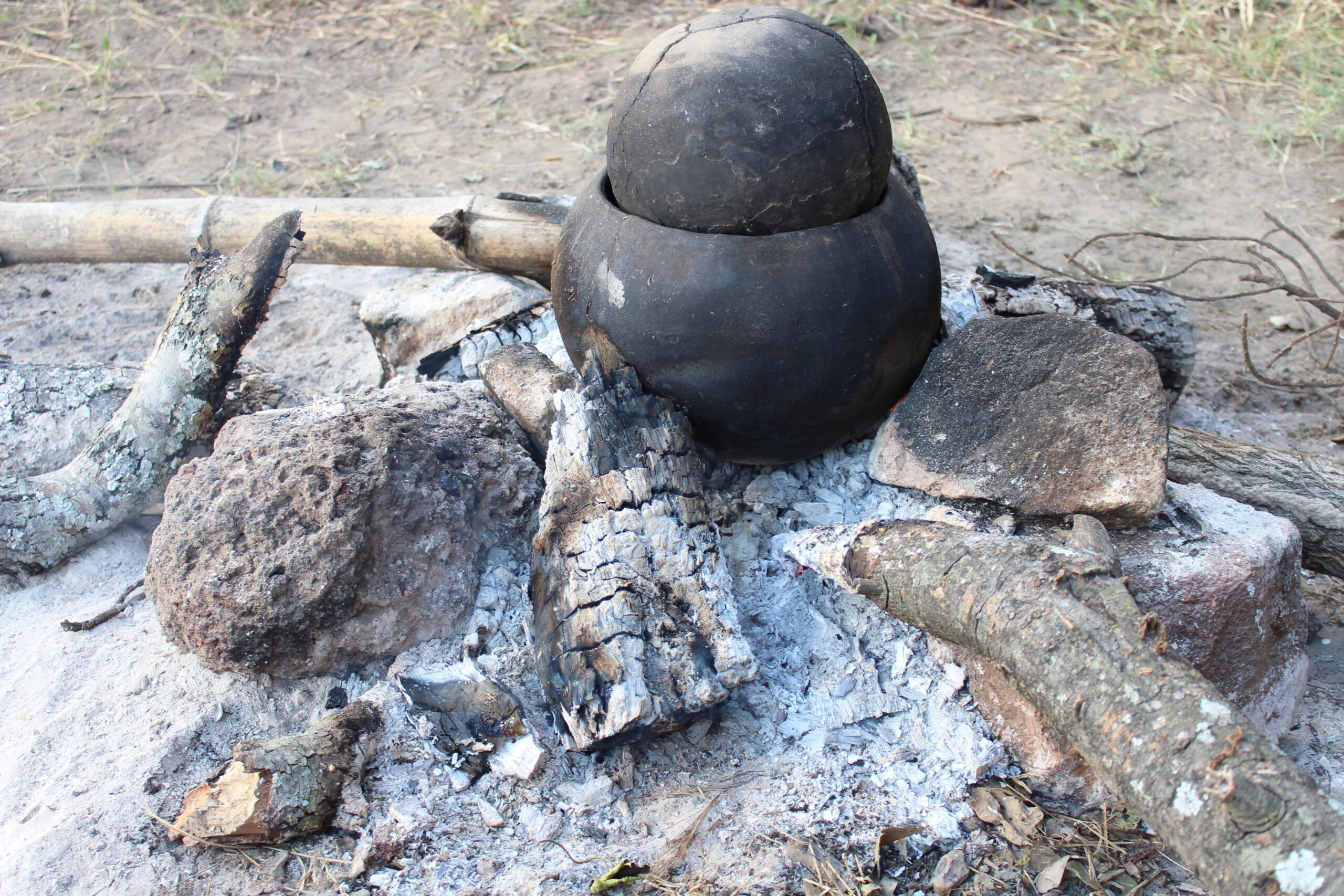
Mutatu refers to the arrangement of stones that support cooking pots on the hearth. In the past, people used actual stones for this purpose, but over time, many transitioned to using stands made from iron, reflecting changes in cooking practices while maintaining the same basic function.
While there are a number of things that could be called mutatu, I went with hearthstones because they were traditionally commonplace everywhere. The riddle says ‘wakazadza nyika‘, meaning ‘which fills the country.’
Other possible mutatu include a version of the board game tsoro, Orion’s Belt (a star constellation), or a three-speed bicycle. I chose hearthstones because they are a familiar, everyday object that resonates most with traditional life.
9. Tsvimbo nyoro mudenhere.
nyoka (snake)
denhere: thick growth of bush
tsvimbo: stick (multi-purpose)
A snake resembles a stick in shape and length, but unlike a real stick (tsvimbo), it is soft and flexible. Hidden within dense bush (denhere), it can easily be mistaken for an ordinary stick, making the comparison both visual and cautionary.
10. Chidhiidhii kuteta hundi moyo uri kumakoto.
mukomana ane musikana wake (A boy in love with a girl, and vice versa)
chidhiidhii (or kadhiidhii): a warbler
teta: to scratch the ground in search of something
hundi: chaff from threshed millet or sorghum
goto (plural makoto): an ear still containing grain after threshing
The warbler scratches around in chaff (hundi), yet its heart is really hoping to find an ear that still contains grain (makoto). As a riddle, it illustrates how a person may busy themselves with trivial matters while their true focus is on reaching or being with the one they love.
This riddle also functions as a proverb. In proverb form, it reminds us that people sometimes appear occupied with something minor or unimportant, while in reality their attention and desire are directed toward something else entirely.
11. Chitanda chemupangara chinohwereketa.
chipendani (mouth bow)
chitanda: a piece of stick
mupangara: a tree known for its strong wood, often used to make durable tools such as hoe handles
hwereketa: to speak or chatter
The riddle describes a piece of mupangara wood that ‘speaks.’ The chipendani is a traditional one-stringed mouth bow instrument made from a curved wooden stick and a stretched string. The player plucks the string while using the mouth as a resonating chamber, shaping and amplifying the sound. In this way, the instrument seems to ‘talk,’ producing rhythmic, speech-like tones.
12. Vakomana vanomhanyirana weshure asingaendi mberi.
makumbo mana emhuka (four legs of an animal)
I actually had two ideas when thinking about this riddle:
- Makumbo mana emhuka (four legs of an animal): The front and hind legs of an animal move toward each other as it walks, but the hind legs never go beyond the front ones.
- Zipi (zipper): The teeth of a zipper move toward each other, which could fit the ‘running toward each other’ part. However, the reference to weshure asingaendi mberi (the ones at the back never going in front) isn’t really accurate, because the zipper teeth are side by side rather than fore and hind.
So, although both ideas work, my vote goes to makumbo mana emhuka, because it captures the fore-and-hind relationship described in the riddle.
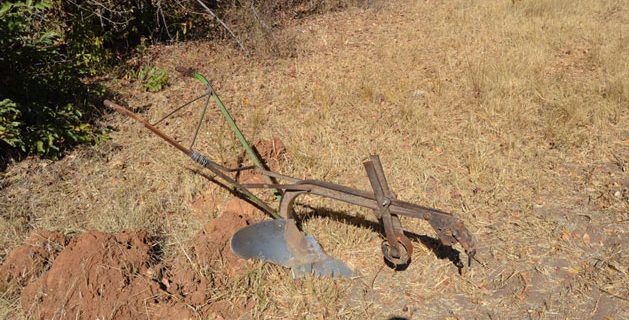
13. Ndinofambisa muromo asi ndakanyarara.
gejo (plough)
The blade of the plough, called muromo, dips silently into the ground as the plough moves.
The word muromo can refer to the brim of a cup, the point of a spear or arrow, a ploughshare, or the tip of something. In this context, I felt that the ploughshare was the most suitable reference because there is an element of motion implied by kufambisa (‘to cause to move’). When someone ploughs, the ploughshare can travel a long distance quietly through the soil.
The plough is a common implement in many traditional homesteads, reflecting the subsistence agriculture characteristic of traditional Shona life.
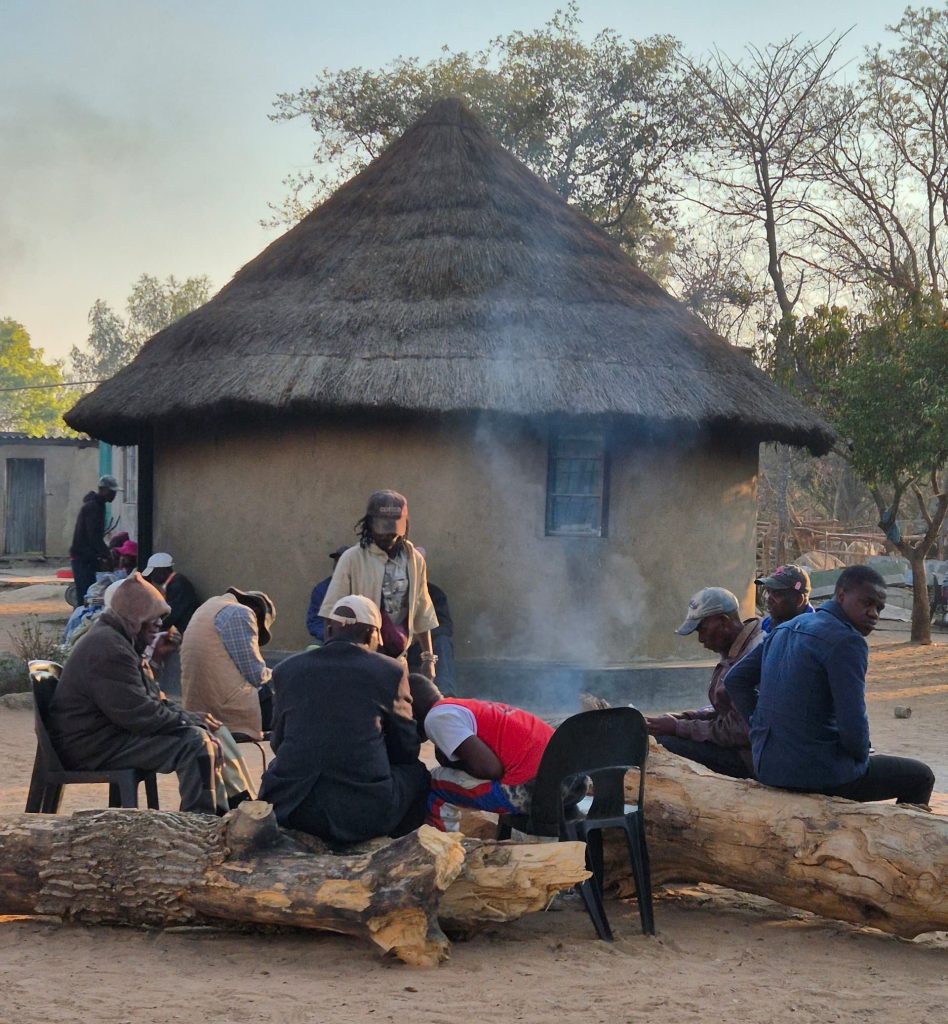
14. Imba yasekuru vangu inomira nebango rimwe.
hwohwa (mushroom)
bango: pole
The mushroom cap resembles the curved roof of a traditional Shona hut, and supported by a single stalk, the mushroom looks like a miniature hut standing on its own.
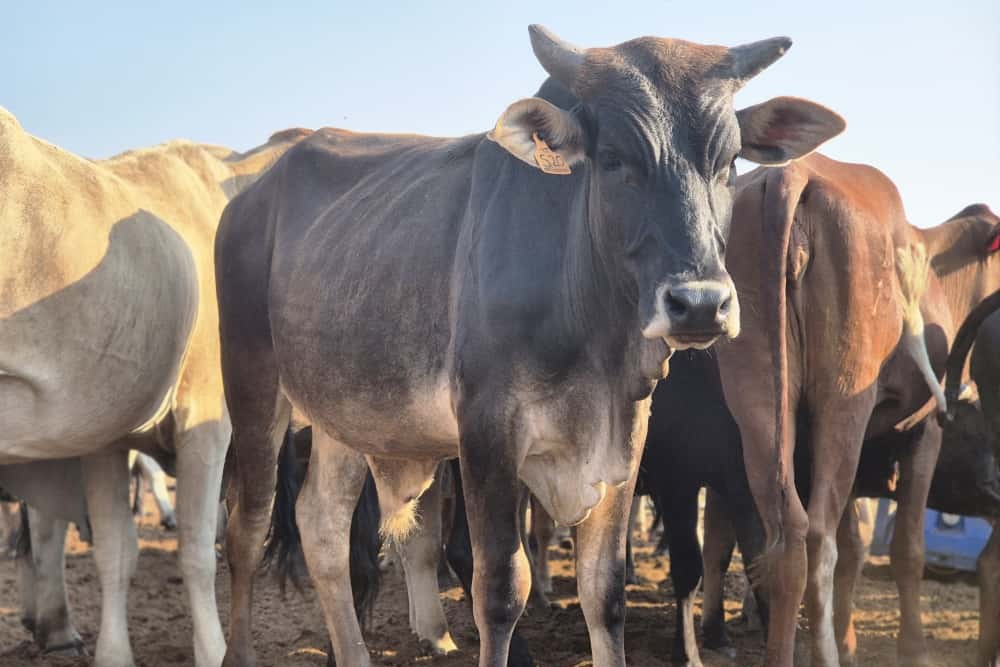
15. Mombe dzababa vangu dzaenda kunonwa dzisina miswe, dzikadzoka dzaanayo.
chimera (sprouted grain)
This riddle refers to grain that is soaked in water during the malting process. Before soaking, the grains have no visible sprouts. After absorbing water and beginning to germinate, small shoots emerge, resembling tails. The visible change that occurs as the grain sprouts is captured in the riddle as the transformation from tail-less to tailed cattle.
Chimera is traditionally prepared for foods and beverages that require malted grain, making it a familiar process within many traditional households.
The phrasing of the riddle is based on traditional cattle herding, where a herder ensures the cattle have a chance to drink from a river or other water source. This everyday scene is familiar in traditional Shona life.
More than vocabulary knowledge
Zvirahwe are a remarkable way to test not just one’s knowledge of the Shona language, but also understanding of the wider Shona world and culture. The Shona observed patterns and metaphors in ordinary things, weaving humor and practical wisdom into daily life.
The imagery and patterns in these riddles were drawn from everyday life, farming, animals, and natural objects to teach, amuse, and preserve knowledge. This showcases the creativity and keen observational skills of the Shona people, as well as their deep connection to the environment.